TRIAL WEBSITE: History
We have put together this part of the website to help further understand the breadth of history in our town. We’d love you to explore it, check it, question it, and tell us what’s missing. You can email us at history@lovebarnet.co.uk

Hadley Brewery, founded before 1825 at Monken Hadley near Barnet, brewed ales until brewing ceased after its 1938 takeover by Fremlins.
Folly Farm (originally Folly House), built in 1686, stood on Monken Hadley Common’s southern edge and later became a popular recreational spot. The farm site now hosts the Jewish Community Secondary School, replacing its former agricultural and leisure use.
Arkley Brickwork, one by Arkley Gate, and one near the Three Elms pub (now known as The Arkley)
Victoria Hospital opened in 1888 in Barnet as a cottage hospital to commemorate Queen Victoria’s Jubilee, later moving to Cedar Lawn, Wood Street in 1924. It became the Victoria Maternity Hospital in 1949 and remained in use until its closure in 1987, after which the Grade II listed building was converted into apartments.

Barnet FC began in 1888 (evolving from New Barnet/Woodville and later the 1912 merger of Barnet Avenue and Alston Works as “Barnet & Alston,” becoming Barnet FC in 1919). Underhill opened in 1907 by Barnet Alston, where they played until moving out in 2013.


Written by Barnet-born postal official F. E. Baines, these volumes trace the rise of the mail coach and the Post Office – often citing Barnet’s pivotal position on the Great North Road.


The Arkley sports car was produced by John Britten Garages at Arkley, using lightweight bodywork on classic small-car chassis. The kit became a cult local design and still appears at classic shows.


“Most High Barnet residents are familiar with the Marie Foster Centre – awaiting demolition for redevelopment – but few probably realise that when opened in 1973, the 30-bed hospital in Wood Street was the first purpose-built home in the country for young people suffering from multiple sclerosis.” (source: Barnet Society)

Barnet’s workhouse served the poor law union until 20th-century welfare reforms.
“Barnet Foundling Hospital (BFH) was located on Monken Hadley Common. The smallest of six country branches of the Foundling Hospital in London (FHL), it housed 40 children from December 1762 until March 1768. Managed by Prudence West, a local ‘inspector’, living in Barnet High Street, it was the only hospital not to be run by a board of male governors. More than two hundred children were cared for in the local area over five years by ‘nurses’ (foster parents)…” (source)
As part of the Great North Road, Chipping Barnet became the second posting town in the kingdom (source), with 21 coaching inns serving travellers and changing horses (source). At its peak in the late Georgian era, some 130 coaches passed through each day, but the trade declined rapidly with the arrival of the railways.
Established in 1859 by the Cowing family, the Barnet Press was originally published and printed at its premises in Barnet High Street.
See Barnet Museum, inc books:
- Gwyneth Cowing, ‘The Story of the Barnet Press’, in W. H. Gelder (ed.), Historic Barnet (London, 1984) pp. 91–104
- B. J. White, ‘A History of the Barnet Press’ (typescript, Barnet Museum, 1978)
“Alston Works was originally a Dental Factory opened in 1891.The first dentist pump chair was made there. The works’ football team, Alston F.C. combined with two other clubs to form Barnet F.C. now a League club. This team regularly gathered in The White Lion pub in St. Alban’s Road, Barnet. Alston Works consists of a group of buildings some of which are largely unchanged though others have been adapted for different uses.” (Source: Barnet Local List 2020)
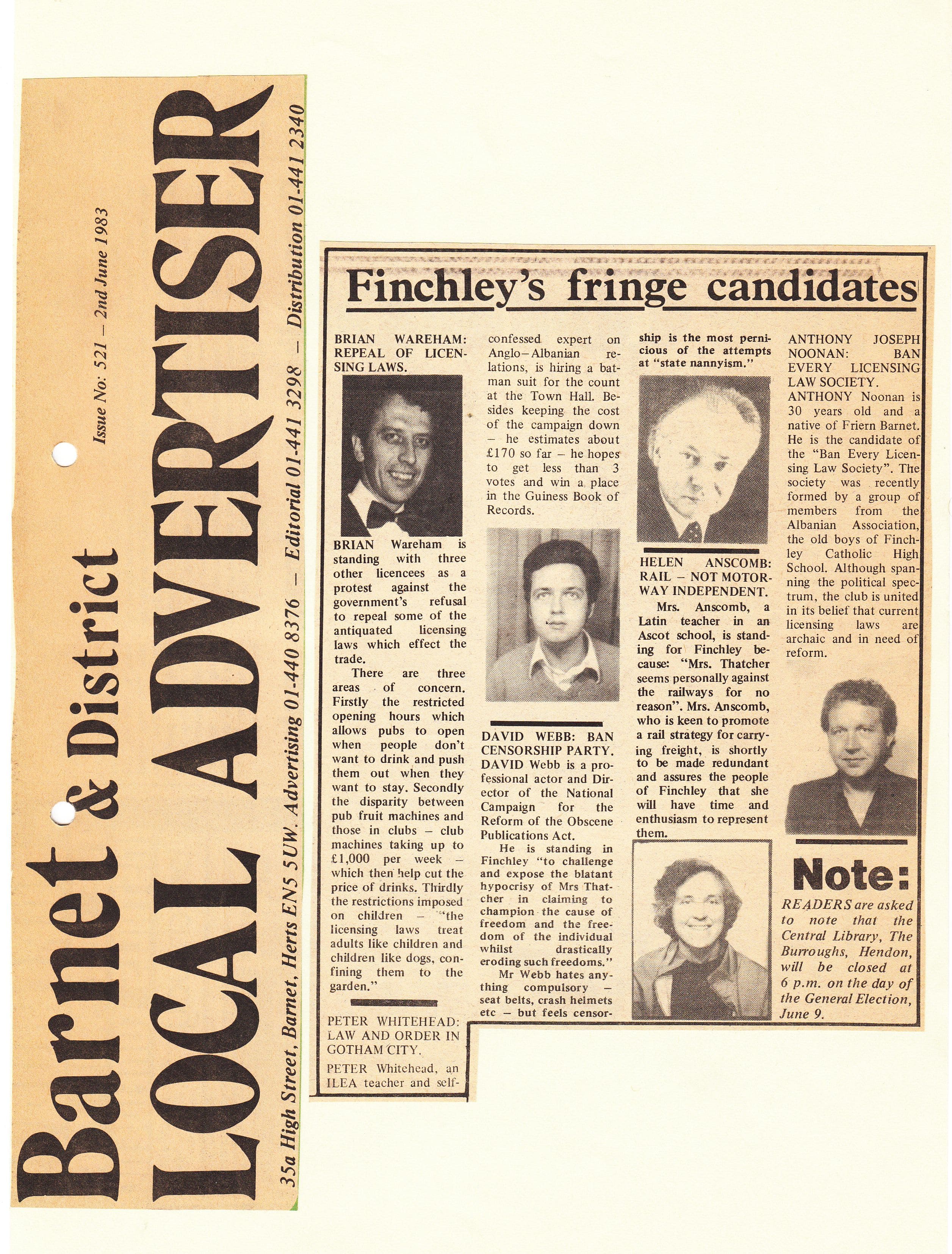
Barnet had a number of newspapers, Barnet Gazette (1851-1861), The Barnet Press (1861-2017 @ 118 High St, later 10 St Albans Rd.), the Barnet Times (circa 1890? now a free paper for the borough), the Barnet Independent, the Barnet and District Local Advertiser.

Optical and scientific instrument-makers W. Watson & Sons developed the “Barnet Ventilator”, a post-war respirator used in hospitals. Photo source: Science Museum